What should a dish washer do to make sure a sanitizer is effective?
When it comes to food safety, knowing how to clean, sanitize, and disinfect dishes, utensils, surfaces, and other items that come in contact with your nutrient is VERY important. Cleaning, sanitizing, and disinfecting are a big role of your nutrient prophylactic repertoire, and doing them right goes a long way toward preventing foodborne illness.
In this commodity, Stop Foodborne Disease volition shine a bright light on exactly what these steps are, how they help kill harmful germs, and how to do them effectively.
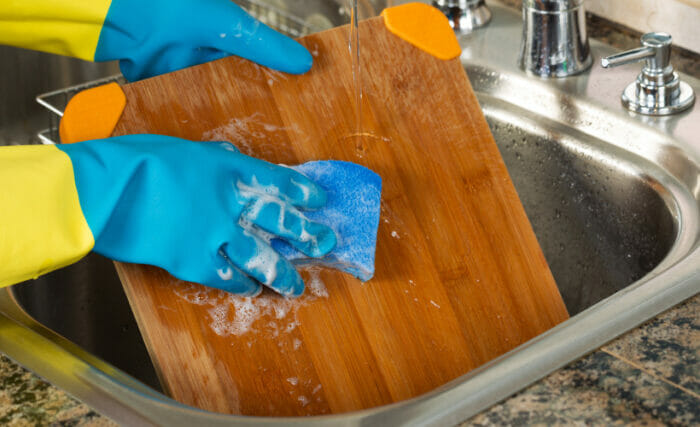
HOW TO Clean
Every unmarried time you lot use dishes, utensils, cooking equipment, and surfaces in your kitchen, they demand to be cleaned (and sanitized).
When you clean, you're removing visible food, crumbs, or dirt from a dish or surface. Earlier you can sanitize or disinfect something, information technology must exist clean first.
For your dishes, utensils, and cooking equipment, optimally you'll want to utilize a dishwasher. Why? Because the dishwasher'due south high heat does wonders for killing off harmful bacteria and it may come equipped with a sanitize bike that uses food-safe chemicals for added effectiveness (more than on sanitizing later).
Don't have a dishwasher?
Use a sink with iii basins to wash, rinse, and sanitize your dishes. If your sink doesn't have iii basins, use one or ii large pans as the second or third basins, and follow these steps:
Step One:
Scrape nutrient off surfaces before washing.
Footstep Ii:
Wash the dishes in hot, soapy water. Be certain to use clean dishcloths each day and don't use sponges! They tend to harbor germs.
Step Three:
Rinse dishes very thoroughly in clean, hot water. You want all the soap removed because lather that makes its way into your chlorine bleach solution in Pace 4 stops the bleach from sanitizing.
Step Four:
Sanitize the dishes with a chlorine bleach solution OR the hot water method (see the "HOW TO SANITIZE" department below for directions on these two options). Now, you may be asking: How important is it to sanitize? Does it REALLY make any deviation? The short answer is YES. If your goal is to do equally much as you can to make sure germs are destroyed and prevent foodborne affliction, you definitely want to sanitize your dishes.
Step Five:
Allow dishes to air dry. Don't dry out with a fabric or towel; this can spread germs.
HOW TO SANITIZE
Sanitizing is an important nutrient safety step that follows cleaning.
When you sanitize, y'all're killing harmful germs with high heat or a chemic solution.
Restaurants, hospitals, daycares, retirement homes, and many other public spaces all sanitize and disinfect their facilities. And we at STOP strongly encourage you to bring this practice into your daily dwelling house-cleaning routine.
Offset, let's cover dishes. If y'all apply a dishwasher, use the sanitize characteristic if available. If not, you can soak dishes and wipe cooking equipment with a sanitizing solution or utilize hot h2o (equally noted to a higher place).
Here are directions on two methods for sanitizing:
- Chlorine bleach solution method: Soak dishes for at to the lowest degree one minute in a sanitizing solution made upwards of 1 tablespoon of unscented chlorine bleach + 1 gallon of cool h2o (hot water stops bleach from sanitizing). To make sure your bleach is at the correct concentration, use test strips (a Google search volition bring up many retailers that sell these). Remove dishes and permit to completely air dry out. Apply gloves or utensils to remove dishes from the solution.
- Hot water method: Soak dishes completely covered in 170°F water for at least xxx seconds. Use a thermometer to check water temperature and fourth dimension your soak with a clock. Remove dishes and allow to completely air dry. Apply gloves or utensils to remove dishes from hot water.
When information technology comes to sanitizing surfaces/other items with a solution, at that place are three different types with specific purposes:
Sanitizing Solution #1 for Food Contact Surfaces:
Mix ¼ teaspoon bleach +
ane quart cool water
Sanitizing Solution #2
for Diapering Surfaces
(Including Areas Contaminated past Blood or Actual Fluids):
Mix 1 tablespoon bleach + 1 quart cool h2o
Sanitizing Solution #3 for Toys in Contact with Mouths:
Mix 1 teaspoon bleach +
1 gallon cool water

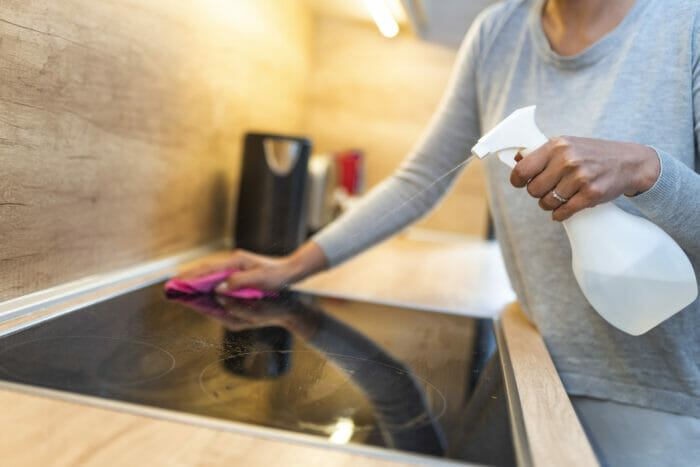
HOW TO DISINFECT
Disinfecting is even more constructive than sanitizing when information technology comes to destroying germs lurking on surfaces.
When yous disinfect, you're wiping difficult surfaces make clean and and then wiping with a disinfecting solution, which is stronger than a sanitizing solution.
Here'south how to make clean and disinfect hard surfaces like tables, chairs, and counters:
Footstep Three:
Mix up a disinfecting solution of ¼ cup of chlorine bleach with i gallon of cool water.
Use a spray bottle to spray surfaces with the solution (use the heavy spray setting) and wipe the surfaces thoroughly with a clean material.
Note: When information technology comes to using disinfecting wipes you'll find at your grocery store, these are better than not disinfecting at all; still, we don't
recommend these wipes equally your best option.
For optimal germ-killing, stick with the solution + method listed in a higher place.
Stride 4:
Allow to air dry.
End recommends cleaning and disinfecting your tables, chairs, and counters after every employ.
TIP: Ask your local health section for assistance using chlorine test strips to verify the strength of sanitizing solutions.
Keeping your kitchen, dishes, utensils, serving areas, and surfaces clean and complimentary from germs is an ongoing job that needs daily attention from everyone in your household. Share this article with each person in your family and then they're knowledgeable, besides, on how to help make certain your kitchen doesn't cause foodborne illness.
Thanks in advance for helping us spread the food safety word!

Our mission:
As the vocalization of people afflicted past foodborne illness, we collaborate with partners in academia, the nutrient industry, and government to prevent foodborne illness. Nosotros advocate for effective nutrient prophylactic policy and facilitate civilisation change to increment nutrient safety.
© All rights reserved 2022
Source: https://stopfoodborneillness.org/fft-clean-sanitize-disinfect/
0 Response to "What should a dish washer do to make sure a sanitizer is effective?"
Post a Comment